A Literary Magazine in Support of the Jewish Community
"He Learned His Voice Could Not Destroy the World" by Richard Jeffrey Newman
He Learned His Voice Could Not Destroy the World
1
A bris, I read last night in God’s Phallus,
by Howard Eilberg-Schwartz,
is guarantee a naked Jewish man
is never naked of God’s commandments,
that his penis will shine, the Midrash says,
like the perfectly cut diamond
a queen puts on for her king’s eyes only,
which I guess is why this morning
I remembered yeshiva-bocher-stepping
with Yossi Weiser when I was twelve
back to the two-story house we’d been in
for Havdallah the night before. “Remember,”
he said, as we walked in the open front door,
“just like you weren’t mechalel Shabbos
when you left that twenty dollar bill in the wind,
be here now with proper kavanah,
and HaShem will wipe your slate clean.”
2
“When they placed you in your Uncle Max’s lap,”
my grandmother told me—I was seven years old
and wanted to know if it had hurt—“he put
a few drops of red wine on your lips
to keep you calm.” Then she gently pinched
a bit of belly flesh she knew would tickle.
“That’s what it felt like,” she laughed with me,
and since I had no reason to doubt her,
I was not prepared when the cut came
that Yossi and I were there to celebrate
for how the boy I assumed
would giggle as I had done
screamed, and,
as the kvatterin carried him
to where his mother waited,
silent with all the other women
on the floor above us,
kept on screaming,
and no doubt continued to scream
till the comfort she gave him with her body
helped him feel again at home in his.
Nor was I prepared for how,
as soon as the mohel did his job
and the boy’s pain filled the room,
the men started laughing and singing,
some of them clapping and dancing
in heavy steps that shook the walls—
Siman tov umazel tov umazel tov usiman tov!—
or for Yossi’s hand on my shoulder
pushing me to join in,
or how I allowed myself,
like that money I let the wind keep,
to be swept along,
shaking the hands held out to me:
the father’s, the sandek’s,
the man from the previous night’s Havdallah,
who smiled like I could be his own son,
each of us now doubly beautified,
making our way to the dining room,
where the seudah the women had set for us
awaited our collective hunger.
Notes:
God’s Phallus by Howard Eilberg-Schwartz (Beacon Press 1994)
Bris: Jewish ritual circumcision.
Yeshiva-bocher-stepping: A yeshiva bocher is a boy studying in yeshiva; when I was in yeshiva we were expected always to walk quickly and purposefully, as if we were rushing to fulfill God’s commandments.
Havdallah: The ceremony that marks the end of Shabbat and a return to the regular week.
Mechalel Shabbos: In violation of Sabbath law.
Kavanah: Intention; you are supposed to perform God’s commandments with a proactive intention to do so.
Kvatterin: Literally messengers, the people who carry the Jewish boy about to be circumcised from his mother’s arms to where the procedure will actually be performed.
Sandek: The man who is honored with the privilege of holding the boy in his lap while he is being circumcised.
Seudah: A meal prepared for a special occasion, like a circumcision, or for a Jewish holiday.
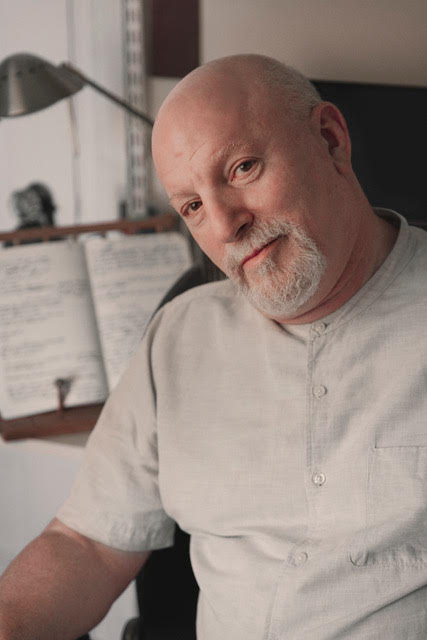
Richard Jeffrey Newman
Richard Jeffrey Newman has published three books of poetry, T’shuvah (Fernwood Press 2023), Words for What Those Men Have Done (Guernica Editions 2017) and The Silence of Men (CavanKerry Press 2006), as well as three books of translation from classical Persian poetry, Selections from Saadi’s Gulistan, Selections from Saadi’s Bustan (Global Scholarly Publications 2004 & 2006) and The Teller of Tales: Stories from Ferdowsi’s Shahnameh (Junction Press 2011). His essays have appeared in Salon, Majuscule, and Solstice, among other places. He curates the First Tuesdays reading series in Jackson Heights, NY. His website is www.richardjnewman.com.